Planning Tips
Full-Service Wedding Planning: Complete Support from Start to Finish
A complete guide to full-service wedding planning, covering budget management, venue selection, vendor coordination, guest arrangements, design, logistics, timelines, and wedding-day execution.
Introduction
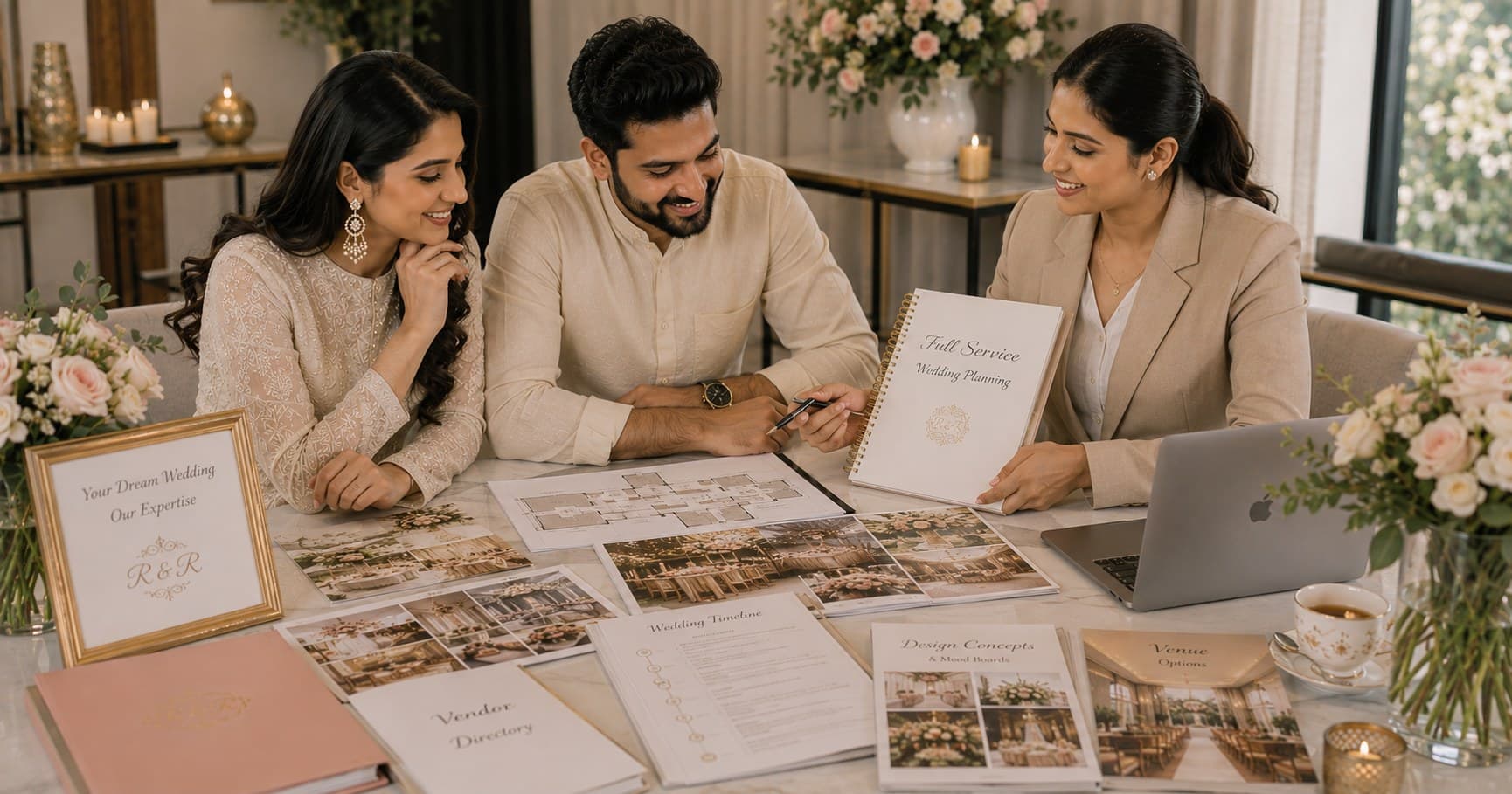
Planning a wedding involves much more than selecting a venue and booking a few vendors. There are budgets to manage, schedules to coordinate, guests to organize, design decisions to make, and many details that need to come together at the right time.
Full-service wedding planning provides support throughout the entire planning journey.
Instead of managing each part of the celebration separately, a full-service wedding planner can help bring the different elements together—from the initial planning stage through the wedding day.
What Is Full-Service Wedding Planning?
Full-service wedding planning means having professional support across the major stages of your wedding.
Depending on the planning service, this may include:
Initial planning and consultation
Budget planning
Wedding concept and design
Venue selection
Vendor sourcing and coordination
Guest management
Wedding invitations
Catering coordination
Decoration planning
Entertainment coordination
Transportation
Accommodation
Wedding timeline
Rehearsal coordination
Wedding-day management
The exact services can vary, so always confirm what is included in the planner's package.
Why Choose Full-Service Wedding Planning?
A full-service approach can make a complex wedding easier to manage.
It can help couples:
Save planning time
Organize multiple vendors
Keep track of important deadlines
Manage the overall budget
Coordinate different wedding functions
Handle logistical details
Create a consistent wedding experience
Reduce last-minute stress
It can be especially useful for large celebrations, multiple wedding functions, destination weddings, or couples with demanding schedules.
1. Start With a Wedding Planning Consultation
The planning process usually begins by understanding the couple's expectations.
Discuss:
Wedding date
Number of functions
Guest count
Budget
Preferred wedding style
Venue preferences
Cultural or traditional requirements
Food preferences
Entertainment
Photography and videography
Guest experience
This initial discussion gives the planning team a clear understanding of the celebration.
2. Build the Wedding Budget
Budget management is one of the important parts of full-service planning.
The planning team can help organize the budget across categories such as:
Venue
Catering
Decoration
Photography
Videography
Entertainment
Outfits
Makeup
Transportation
Accommodation
Invitations
Guest experiences
Other wedding services
A clear budget makes it easier to prioritize spending and monitor costs throughout the planning process.
3. Develop the Wedding Concept and Design
A full-service planner can help turn your ideas into a cohesive wedding concept.
Design decisions may include:
Color palette
Floral arrangements
Stage design
Entrance décor
Table settings
Lighting
Seating design
Ceremony décor
Reception décor
Overall visual theme
The goal is to make different parts of the celebration work together visually and functionally.
4. Select the Right Venue
Venue selection affects many other parts of wedding planning.
Consider:
Guest capacity
Location
Available dates
Venue layout
Facilities
Catering options
Parking
Accommodation
Event timings
Decoration restrictions
A planner can help compare venue options based on your requirements and overall budget.
5. Source and Coordinate Wedding Vendors
A wedding may involve many different professionals.
These can include:
Caterers
Decorators
Florists
Photographers
Videographers
Makeup artists
Entertainment teams
Transportation providers
Invitation providers
Lighting and sound teams
A full-service planner can help coordinate these vendors, so their responsibilities and schedules are clearly understood.
6. Manage Wedding Invitations and Guest Information
Guest communication is an important part of the planning process.
Planning support may include:
Invitation planning
Guest list organization
RSVP tracking
Function information
Accommodation information
Transportation details
Special guest requirements
Keeping guest information organized helps create a smoother experience before and during the celebration.
7. Plan Catering and Guest Experience
Food is an important part of many wedding celebrations.
Planning may involve:
Menu selection
Guest count coordination
Dietary requirements
Service style
Beverage arrangements
Dessert
Catering schedule
The planner can also help coordinate catering requirements with the venue and other event teams.
8. Coordinate Decoration and Event Setup
Wedding decoration often involves multiple elements and vendors.
The planning team can coordinate:
Stage setup
Ceremony area
Entrance
Floral arrangements
Guest seating
Dining area
Lighting
Signage
Reception setup
A coordinated setup helps ensure the venue is ready according to the planned design and schedule.
9. Manage Wedding Logistics
Logistics are the practical details that keep the celebration moving smoothly.
These may include:
Vendor arrival times
Equipment delivery
Setup schedules
Guest transportation
Parking
Accommodation
Venue access
Event transitions
Equipment removal
Managing these details in advance can reduce confusion on the wedding day.
10. Create the Wedding Timeline
A detailed wedding timeline helps everyone understand what happens and when.
The timeline may include:
Vendor arrival
Setup
Couple preparation
Guest arrival
Ceremony
Couple entrance
Photography
Speeches
Performances
Dining
Reception activities
Event closing
Share the appropriate schedule with vendors and key members of the wedding team.
11. Coordinate Multiple Wedding Functions
Many Indian weddings include multiple functions across different days or venues.
Full-service planning can help coordinate each function while maintaining consistency across:
Timelines
Vendors
Design
Guest arrangements
Transportation
Catering
Photography
Entertainment
A central planning approach can make multi-function celebrations easier to manage.
12. Manage Guest Transportation and Accommodation
Guests travelling from different locations may require additional support.
Planning may include:
Airport or station transfers
Hotel arrangements
Guest room allocation
Shuttle schedules
Vehicle coordination
Check-in information
Special arrangements for selected guests
Clear communication is important, so guests know where they need to be and when.
13. Coordinate the Wedding Rehearsal and Final Checks
Before the wedding, review the complete plan.
Confirm:
Vendor schedules
Venue setup
Decoration
Catering
Guest arrangements
Transportation
Entertainment
Photography
Videography
Ceremony sequence
If a rehearsal is required, make sure the relevant participants understand their roles and timing.
14. Manage the Wedding Day
On the wedding day, the planning team can coordinate the different moving parts according to the agreed schedule.
This may include:
Vendor coordination
Setup supervision
Guest assistance
Timeline management
Ceremony coordination
Entertainment coordination
Transportation coordination
Handling unexpected issues
The objective is to allow the couple and their families to focus on enjoying the celebration rather than managing logistics.
Questions to Ask Before Choosing a Full-Service Wedding Planner
What services are included in the full-service package?
When does planning support begin?
How involved will the planner be throughout the process?
Do you help with budget management?
Do you help with venue selection?
Do you recommend and coordinate vendors?
Do you manage guest arrangements?
Do you coordinate multiple wedding functions?
Do you create the wedding-day timeline?
Will someone be present on the wedding day?
How do you handle unexpected issues?
Is additional planning services charged separately?
How many team members will support the wedding?
What happens if the wedding date or requirements change?
Full-Service Wedding Planning Checklist
Discuss your wedding vision
Set the overall budget
Prepare the guest list
Choose the wedding dates
Shortlist the venue
Develop the wedding design
Select major vendors
Coordinate vendor contracts
Plan invitations
Track RSVPs
Finalize catering
Plan decoration
Arrange photography and videography
Organize entertainment
Plan transportation
Arrange guest accommodation
Create the master wedding timeline
Coordinate multiple functions
Complete final vendor confirmations
Conduct final venue checks
Coordinate the wedding day
Final Thoughts
Full-service wedding planning is about bringing the entire celebration together under one organized planning process.
From budget management and venue selection to vendor coordination, guest arrangements, design, logistics, timelines, and wedding-day execution, professional planning support can make a complex celebration easier to manage.
The most important step is to understand exactly what your planner's package includes before booking.
Choose a planning team that understands your priorities, communicates clearly, coordinates effectively, and can manage the details that matter to you.
With the right full-service wedding planner, you can spend less time managing logistics and more time enjoying the journey toward your celebration.
Planner Kart — Plan Better. Celebrate Beautifully.
Related Articles
Eco-Friendly Wedding Ideas for a Beautiful Celebration
An eco-friendly wedding can be beautiful, elegant, and memorable without requiring complicated changes. From digital invitations and reusable decorations to seasonal flowers, thoughtful food planning, shared transportation, and sustainable favors, small choices can make a meaningful difference.
By Ananya Krishnan
How to Include Family Traditions in a Modern Wedding
A modern wedding can still hold the traditions and customs that are meaningful to your family. By thoughtfully combining traditional rituals with modern ideas, couples can create a wedding that respects family values while reflecting their own personality and style.
By Ananya Krishnan
How to Create a Smooth Wedding Day Schedule
A well-planned wedding day schedule helps keep every ceremony, vendor, and activity organized. A clear timeline can reduce confusion, prevent unnecessary delays, and help everyone enjoy the celebration.
By Ananya Krishnan

How to Choose the Right Wedding Planner for Your Celebration
Planning a wedding involves many details, from choosing vendors and managing the budget to coordinating guests and keeping the wedding-day schedule on track. A professional wedding planner can bring these arrangements together and reduce the stress involved in planning.
By Ananya Krishnan