Catering
How to Plan a Traditional Feast for Your Celebration
A practical guide to planning a traditional, balanced and memorable South Indian wedding feast.
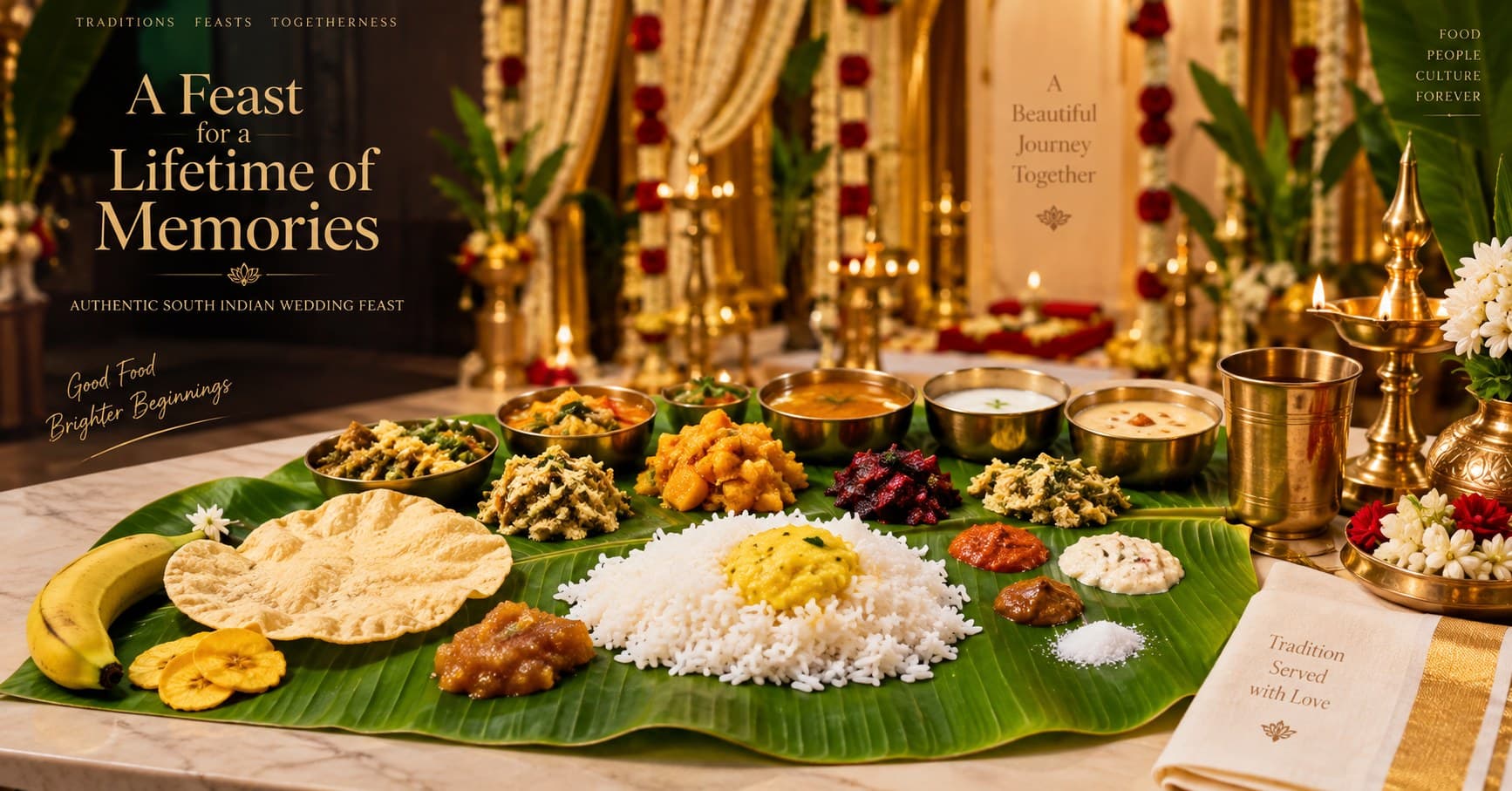
Food is one of the details guests remember long after a wedding celebration ends. A well-planned South Indian wedding food menu can bring together tradition, variety, presentation, and hospitality while making the meal feel like an important part of the occasion.
From a classic banana-leaf feast to a more contemporary reception spread, the right menu depends on the type of function, guest expectations, service style, and the experience you want to create.
This guide explains how to build a thoughtful South Indian wedding menu without making the selection process unnecessarily complicated.
Why the Wedding Menu Matters
Wedding food is more than a list of dishes. It is part of the atmosphere and often reflects family traditions and the character of the celebration.
A strong wedding catering menu should offer enough variety without becoming confusing or excessive. It should also consider when the meal is served, how guests will be seated or served, and which dishes work well together.
The goal is balance: familiar favorites, meaningful traditional choices, and a few memorable touches.
1 .Start With the Type of Wedding Function
Before choosing individual dishes, identify the function for which you are planning the menu.
A morning celebration may suit a lighter tiffin-style selection, while a traditional wedding lunch can Centre around a banana-leaf meal. An evening reception may work better with a broader buffet, live counters, snacks, beverages, and desserts.
Planning the menu around the function helps prevent the common mistake of using the same food structure for every event.
2. Build a Traditional Banana-Leaf Feast
For a traditional South Indian wedding meal, banana-leaf service can create a distinctive dining experience.
The meal can be arranged in a planned sequence so that guests receive accompaniments, rice preparations, gravies, and desserts in a comfortable flow.
A classic spread may include items such as pickle, banana, poriyal, kootu, avial, pachadi, appalam, vadai, paruppu with ghee, sambar, rasam, curd rice, and payasam.
The exact combination should be adapted to the family's food traditions rather than treating every South Indian menu as identical.
3. Balance the Menu With Different Flavours
A memorable South Indian wedding food menu should not rely on one dominant flavor.
Try to create contrast between:
Mild and spicy preparations
Crispy and soft textures
Tangy and creamy accompaniments
Savory dishes and sweets
Rich dishes and lighter sides
This makes the meal feel varied without requiring an unnecessarily long list of dishes.
4. Add Live Counters for a Modern Reception
Live counters can add energy to an evening celebration because guests can see food being prepared and choose freshly served portions.
Depending on the overall menu, options can include dosa or uthappam stations, mini idly counters, chaat-style selections, beverage stations, or a regional specialty counter.
A live counter works best when it complements the main menu rather than duplicating dishes already available elsewhere.
5. Plan Rice, Main Dishes and Accompaniments Carefully
Rice and its accompaniments form an important part of many South Indian wedding meals. Instead of selecting several similar rice dishes, choose combinations that create variety.
For example, a menu can pair steamed rice with dal and ghee, sambar, rasam, a special gravy, and curd rice, with one variety-rice preparation added when appropriate.
Vegetable preparations such as poriyal, kootu and avial can provide different textures and flavors around the main courses.
6. Give Desserts a Memorable Finish
Dessert is often one of the most anticipated parts of a celebration.
Traditional choices such as payasam, kesari, obbattu or other regional sweets can give a wedding menu a strong cultural identity. A reception can also include a small dessert counter with complementary modern options.
Rather than selecting many sweets that feel similar, choose a few with different textures and flavor profiles so the final course feels intentional.
7. Consider Guest Preferences and Dietary Requirements
A wedding menu should work for the people actually attending the celebration.
Before finalizing the food, consider dietary restrictions, allergies, religious or family preferences, children's needs, and whether guests expect vegetarian or non-vegetarian choices.
For a larger celebration, clearly communicating special meal requirements to the catering team can make service smoother and reduce last-minute confusion.
8. Match the Menu to the Service Style
The same dishes can create very different experiences depending on how they are served.
Banana-leaf service suits a traditional seated meal. Buffet service provides more flexibility for guests who want to choose from several options. Plated service can create a more formal experience, while live counters can add interaction to a reception.
Choose the service style before finalizing the menu so the food and presentation work together.
9. Plan the Menu Around the Guest Count
Guest count is one of the most important practical inputs for wedding catering. It affects preparation, service, seating, staffing, and the quantity of food required.
A good catering plan should be based on the expected attendance for each function rather than using one number for the entire celebration. If different events have different guest lists, keep those counts separate when planning.
A catering plan should be based on the event requirements and expected guest count, making guest planning an important part of the booking process.
10. Create a Menu That Feels Personal
The best wedding menus do not simply follow a generic checklist. They reflect the couple and their families.
You might include a family-Favorite sweet, a regional specialty, a traditional recipe associated with a celebration, or a modern dish that guests will enjoy.
Personal touches can make a familiar South Indian wedding menu feel unique without losing its traditional character.
Common Wedding Catering Mistakes to Avoid
Avoid selecting dishes only because they are popular. A menu should work as a complete experience.
Other common mistakes include choosing too many similar dishes, overlooking dietary requirements, adding too many live counters, failing to separate menus by function, and deciding quantities without a realistic guest estimate.
A tasting or menu review before the event can also help identify flavor, portion, presentation, and service issues before the wedding day.
A Simple South Indian Wedding Menu Planning Checklist
Before confirming your wedding catering menu, check the following:
Identify the function and service style.
Estimate the guest count for that specific event.
Choose the main traditional or regional direction.
Balance starters, mains, accompaniments and desserts.
Decide whether live counters add value.
Confirm dietary and family preferences.
Review serving flow and presentation.
Confirm quantities and catering requirements.
Finalize the menu after tasting or discussion.
Keep the final menu organized for the event team.
Frequently Asked Questions
What should be included in a South Indian wedding food menu?
A menu can include traditional accompaniments, vegetable preparations, rice, sambar, rasam, curd, festive starters, sweets and payasam, depending on the function and family tradition.
Is a banana-leaf meal suitable for a wedding?
Yes. Banana-leaf service is a popular traditional format for South Indian wedding meals and can create a distinctive ceremonial dining experience.
How many dishes should a South Indian wedding menu have?
There is no universal number. A balanced menu is usually better than simply adding more dishes. The final selection should depend on the function, service style, guest count and family preferences.
Should a wedding reception have live counters?
A live counter can add variety and interaction, but it should complement the main menu and be selected according to guest expectations and available service space.
How should I plan catering for multiple wedding events?
Treat each event separately. Guest counts, timing, service style and menu requirements can differ between a wedding lunch, reception, pre-wedding function and other celebrations.
What is the most important factor when choosing a wedding catering menu?
Balance. The menu should combine flavor, tradition, variety, guest needs, practical service requirements and the overall style of the celebration.
Make Your Wedding Feast Special
A memorable celebration is built from many details, and food is one of the details your guests experience together.
Whether you are planning a traditional South Indian wedding meal, a contemporary reception, or a combination of both, the right menu should reflect your celebration while keeping guest experience at the Centre.
Choose the traditions you love, add the details that make your celebration yours, and create a feast your guests will remember.
Planner Kart — Plan Better. Celebrate Beautifully.
Related Articles
Wedding catering per-plate guide for Indian receptions
Per-plate pricing should include menu tier, service staff ratio, crockery, and wastage buffer. Always confirm whether taxes, live counters, and late-night snacks are extra.
By Priya Shah