Destination
Wedding Day Coordination Guide: How to Keep Every Detail on Track
A practical guide to managing wedding-day timelines, vendors, venue setup, ceremonies, guests, photography, catering, technical teams, important items, and unexpected changes.
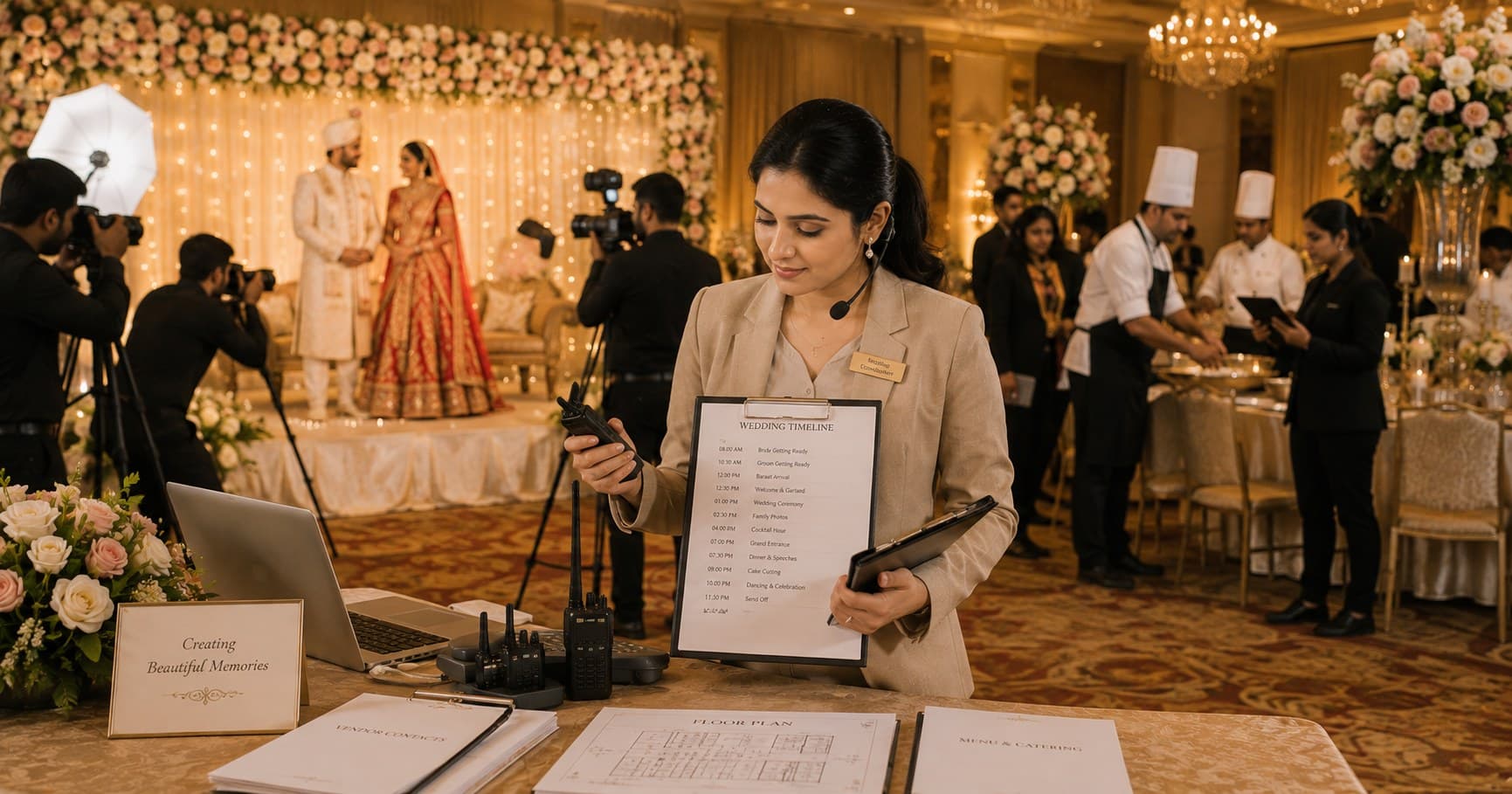
Introduction
Your wedding day brings together months of planning, multiple vendors, important ceremonies, guests, schedules, and countless small details.
Even when everything has been planned carefully, coordinating all these elements on the actual day can become challenging.
Wedding day coordination focuses on making sure each part of the celebration happens at the right time and in the right way.
From vendor arrivals and venue setup to ceremony schedules, guest arrangements, photography, and reception activities, proper coordination helps the day run smoothly while allowing the couple and their families to enjoy the celebration.
Why Wedding Day Coordination Matters
A wedding involves many moving parts that need to work together. Vendors may have different arrival times, ceremonies may follow a fixed schedule, and guests may need guidance throughout the event.
Effective coordination helps:
Keep the wedding timeline organized
Ensure vendors arrive and complete their work on time
Manage transitions between different functions
Reduce confusion among family members and vendors
Keep guests informed and comfortable
Handle unexpected changes quickly
Allow the couple to focus on enjoying their special day
1. Create a Detailed Wedding Day Timeline
A clear timeline is one of the most important coordination tools.
Include important activities such as:
Venue access time
Decoration setup
Vendor arrivals
Makeup and styling
Photography sessions
Guest arrival
Ceremony starts
Ritual timings
Meal service
Reception activities
Couple entries
Entertainment
Final departure
Share the timeline with the people responsible for each activity so everyone understands what needs to happen and when.
2. Confirm Every Vendor Before the Wedding
Do not wait until the wedding day to confirm arrangements.
Contact each vendor before the event and confirm:
Arrival time
Setup requirements
Contact person
Service location
Equipment requirements
Payment status
Special instructions
Vendors should know exactly where they need to be and what they are expected to complete.
3. Assign Clear Responsibilities
One person should not be responsible for every single detail.
Assign responsibilities to specific people or coordination team members.
For example:
One person can coordinate decoration
Another can manage catering
Someone can assist photographers and videographers
Another person can guide guests
Someone can coordinate ceremony-related requirements
Clear responsibilities reduce confusion and prevent important tasks from being forgotten.
4. Prepare a Vendor Contact List
Keep all important contact information in one easily accessible place.
The list can include:
Vendor name
Service type
Contact number
Arrival time
Assigned coordinator
Important notes
Having this information ready makes communication much easier when several vendors need to be contacted during the event.
5. Coordinate Venue Setup
Before guests arrive, make sure the venue is ready.
Check:
Entrance decoration
Stage
Seating arrangements
Ceremony area
Lighting
Sound system
Dining area
Photo areas
Signage
Guest facilities
A final walkthrough before the celebration begins can help identify small problems before they affect guests.
6. Keep the Ceremony Schedule on Track
Wedding ceremonies often include several important rituals and transitions.
The coordination team should know:
When each ritual begins
Who needs to be present
Which items are required
Where the couple should be
When photographers need access
When the next activity begins
The goal is not to rush the ceremony but to make sure important transitions happen smoothly.
7. Coordinate Photography and Videography
Photography and videography often depend on the wedding timeline.
Make sure the photography team knows about:
Couple portraits
Family photographs
Important rituals
Couple entries
Special moments
Reception activities
A coordinator can also help gather family members for group photographs so the process does not take longer than necessary.
8. Manage Guest Movement
Guests may not always know where to go next, particularly when a wedding has multiple areas or activities.
Provide clear guidance for:
Venue entrance
Seating
Ceremony areas
Dining
Rest areas
Photography spaces
Reception activities
Helpful signage and designated people for guest assistance can make movement around the venue much easier.
9. Coordinate Catering and Meal Timings
Food service should match the overall event schedule.
Coordinate with the catering team regarding:
Meal preparation
Service start time
Guest flow
Special dietary requirements
Beverage service
Dessert service
Final meal arrangements
Make sure food service does not interfere with important ceremonies, speeches, performances, or other planned activities.
10. Manage Decoration and Technical Teams
Decoration, lighting, sound, and other technical services often require coordination before and during the event.
Check that:
Decoration is completed before guests arrive
Lighting is functioning properly
Sound equipment is ready
Microphones are available
Screens or displays are working
Backup arrangements are available where necessary
A final technical check can prevent avoidable interruptions during important moments.
11. Keep Important Wedding Items Ready
Small items can become major problems if they are missing at the wrong time.
Prepare a dedicated checklist for items such as:
Rings
Ceremony materials
Documents
Personal accessories
Emergency supplies
Special gifts
Guest-related materials
Assign someone responsible for keeping track of these items throughout the day.
12. Plan for Unexpected Changes
Even a well-planned wedding can experience unexpected changes.
Possible situations include:
Vendor delays
Schedule changes
Technical problems
Weather changes
Guest requirements
Last-minute requests
The coordination team should respond calmly and look for practical solutions without unnecessarily involving the couple in every small issue.
13. Keep Communication Simple
During the wedding, too many messages can create confusion.
Use a simple communication system where key coordinators know:
What is happening now
What happens next
Who is responsible
Who needs to be informed
Important updates should reach the right people quickly without creating unnecessary communication.
14. Protect the Couple’s Time
The couple should not spend their wedding day solving coordination problems.
A good coordination team can handle routine questions and small issues so the couple can focus on:
Enjoying the ceremony
Spending time with family
Meeting guests
Taking photographs
Participating in celebrations
Creating memorable moments
Keeping unnecessary responsibilities away from the couple is one of the most valuable parts of wedding day coordination.
15. Conduct a Final Check Before Each Major Activity
Before an important activity begins, take a few minutes to verify everything.
For example, before the ceremony:
Couple ready
Required items available
Ceremony area prepared
Photographer ready
Videographer ready
Sound system ready
Key family members present
Repeat similar checks before the reception, meal service, performances, and other major activities.
Questions to Consider for Wedding Day Coordination
Before the wedding day, ask:
Who is responsible for coordinating vendors?
Who will manage the wedding timeline?
Who will handle unexpected problems?
Who will assist guests?
Who will coordinate photography and videography?
Who will communicate with the venue?
Who will manage ceremony requirements?
Who will coordinate catering and meal timings?
Is there a backup plan for important services?
Who will make decisions if the schedule changes?
Wedding Day Coordination Checklist
Before Guests Arrive
Complete venue walkthrough
Confirm vendor arrivals
Check decoration
Test lighting and sound
Check seating arrangements
Confirm ceremony setup
Prepare important wedding items
Review the day's timeline
During the Wedding
Monitor the schedule
Coordinate vendors
Guide guests
Coordinate photography
Monitor catering
Manage ceremony transitions
Check technical arrangements
Handle unexpected issues
Keep the couple informed only when necessary
Before the Event Ends
Confirm final activities
Coordinate vendor departure
Check personal belongings
Confirm gifts and important items
Review venue requirements
Complete final venue walkthrough
Final Thoughts
Wedding day coordination is about bringing many individual details together into one smooth celebration.
A clear timeline, reliable communication, assigned responsibilities, vendor coordination, and regular checks can make a significant difference throughout the day.
The goal is not to control every moment perfectly. It is to create a well-organized environment where small problems can be handled quickly and the couple, families, and guests can enjoy the celebration.
With thoughtful coordination and proper preparation, your wedding day can feel organized, comfortable, and memorable from the first arrival to the final moment.
Planner Kart — Plan Better. Celebrate Beautifully.
Related Articles
 Featured
Destination wedding budget basics
Factor travel for core guests, room blocks, local vendor logistics, and weather backup plans. Destination budgets fail when airfare and hospitality for family are treated as optional.
By Kabir Ali
Udaipur destination wedding logistics checklist
For Udaipur, plan boat or hill transfers, heritage venue permissions, heat contingencies, and crew accommodation near the property—not only guest room blocks.
By Kabir Ali