Planning Tips
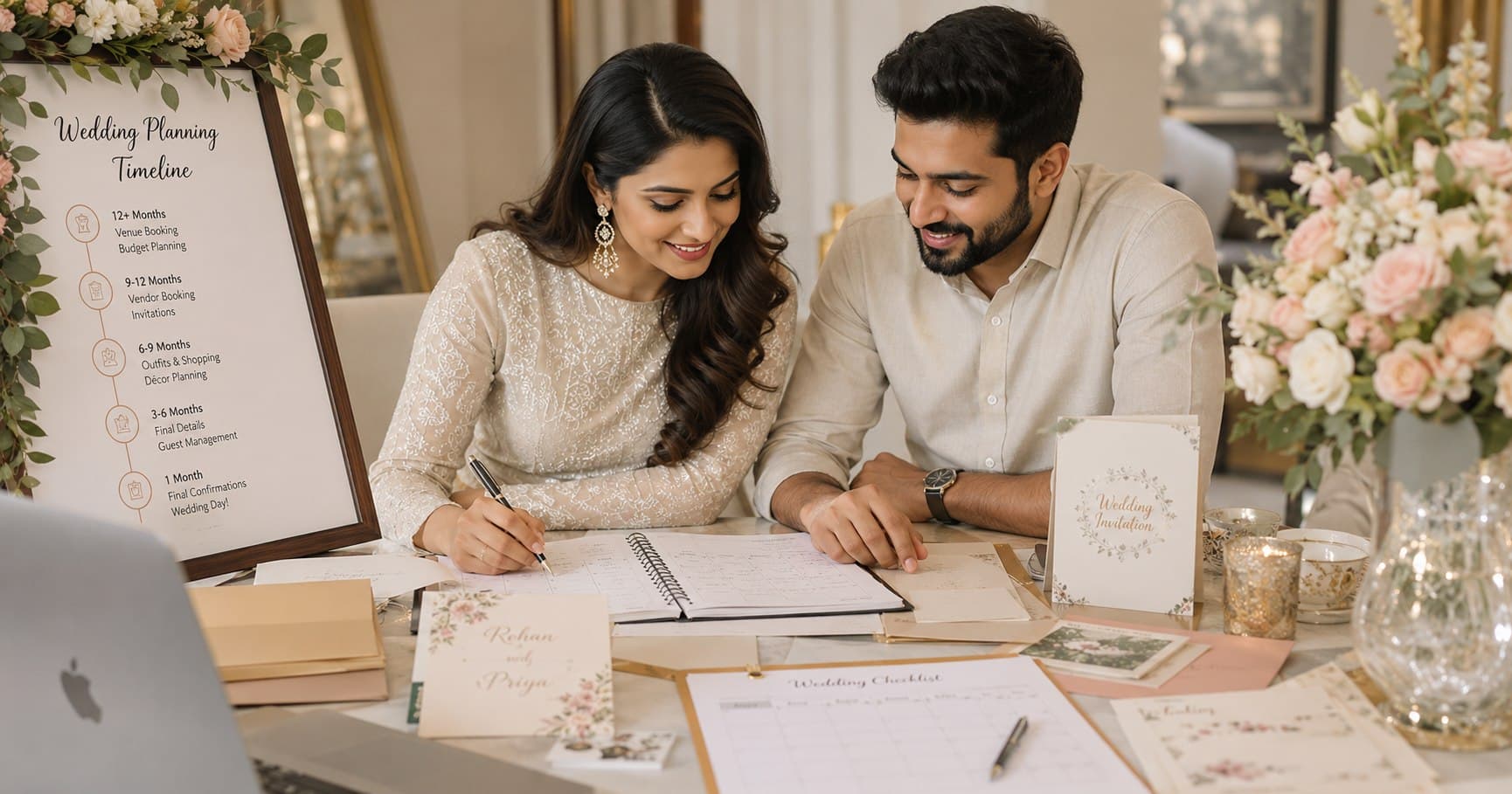
Wedding Planning Timeline: What to Plan Before the Big Day
A practical month-by-month wedding planning timeline covering your budget, guest list, venue, vendors, invitations, outfits, catering, decoration, entertainment, photography, and final preparations.
Introduction
Planning a wedding involves many decisions, from choosing the venue and setting a budget to arranging vendors, invitations, outfits, and final event details.
Without a clear timeline, it can be easy to forget important tasks or leave too many decisions until the last minute.
A wedding planning timeline gives you a structured way to organize everything before the big day. By dividing tasks across different stages, you can make steady progress, manage your budget more effectively, and enjoy the planning process with less stress.
Why a Wedding Planning Timeline Matters
A timeline helps you understand what needs to be completed and when.
It can help you:
Organize wedding tasks in the right order
Avoid last-minute decisions
Track important bookings
Manage your budget
Coordinate different vendors
Give yourself enough time for important preparations
Reduce stress as the wedding approaches
1. Set Your Wedding Budget
One of the first steps is deciding how much you are comfortable spending.
Create a budget that covers major areas such as:
Venue
Catering
Decoration
Photography
Videography
Outfits
Jewelry
Invitations
Makeup and styling
Entertainment
Transportation
Accommodation
Other wedding services
Keep some flexibility in the budget for unexpected expenses.
2. Decide the Wedding Style and Priorities
Before booking vendors, discuss the type of celebration you want.
Think about:
Overall wedding style
Number of functions
Guest experience
Decoration preferences
Food preferences
Entertainment
Photography style
Traditional or modern elements
Also decide which parts of the wedding are most important to you. This helps you prioritize you're spending and planning time.
3. Prepare the Guest List
Start creating a preliminary guest list early.
Divide guests into groups such as:
Immediate family
Relatives
Friends
Colleagues
Special guests
The guest count will influence several other decisions, especially the venue, catering, seating, transportation, and accommodation requirements.
4. Choose the Wedding Venue
Once you have an estimated guest count, start looking at suitable venues.
When comparing venues, consider:
Capacity
Available dates
Location
Venue layout
Facilities
Catering arrangements
Parking
Guest accommodation
Decoration restrictions
Event timings
Book the venue after carefully reviewing the agreement and included services.
5. Book Important Vendors
After securing the venue, begin arranging important wedding services.
Depending on your requirements, these may include:
Wedding planner
Photographer
Videographer
Caterer
Decorator
Florist
Makeup artist
Entertainment team
Transportation providers
Popular professionals may have limited availability, so early planning can give you more choices.
6. Plan Your Wedding Invitations
Once the wedding details become clear, start planning your invitations.
Your invitation should communicate important information such as:
Couple's names
Wedding date
Function details
Venue information
Event timings
RSVP information
If you are using digital invitations, make sure all links and event information are tested before sending them.
7. Finalize Wedding Outfits and Jewelry
Wedding outfits often require planning, selection, fitting, and possible alterations.
Plan outfits for:
Wedding ceremony
Reception
Other functions
Couple's special events
Also organize jewelry and accessories that coordinate with each outfit.
Give yourself enough time for fittings and adjustments rather than waiting until the final week.
8. Plan Beauty and Groom Styling
Beauty preparations should be scheduled well in advance.
Discuss:
Bridal makeup
Groom makeup
Hairstyles
Hair and skin preparation
Trial sessions
Wedding-day timing
If you are arranging professional makeup or styling, confirm the appointment schedule and required preparation before the wedding day.
9. Organize Guest Transportation and Accommodation
If guests are travelling from different locations, transportation and accommodation should be planned early.
Consider:
Airport or station transfers
Guest shuttles
Vehicle requirements
Accommodation arrangements
Check-in and check-out details
Special requirements for elderly guests
Prepare clear information so guests know where they need to go and when.
10. Plan Wedding Decoration and Flowers
Once the venue is confirmed, discuss the decoration concept.
Plan important areas such as:
Entrance
Wedding stage
Ceremony area
Guest seating
Dining area
Photo area
Reception space
Choose colors, flowers, lighting, and decorative elements that work together rather than treating each area separately.
11. Finalize Catering and Menu Details
Food is an important part of the guest experience.
Work with the catering team to finalize:
Menu
Food preferences
Dietary requirements
Service style
Live counters, if required
Beverage arrangements
Dessert options
Confirm the final guest count closer to the event so the catering team can prepare appropriately.
12. Plan Entertainment and Music
Entertainment should be coordinated with the wedding schedule.
Decide whether you want:
DJ
Live singer
Instrumentalists
Wedding band
Family performances
Other entertainment
Prepare a schedule for entrances, performances, speeches, and other important moments.
13. Finalize Photography and Videography Details
Before the wedding, communicate your expectations clearly to the photography and videography teams.
Discuss:
Important ceremonies
Family members
Couple portraits
Candid moments
Special performances
Important group photographs
Highlight video requirements
Sharing the event schedule helps the team prepare for important moments.
14. Complete the Final Wedding Review
As the wedding approaches, review every major arrangement.
Confirm:
Venue booking
Vendor bookings
Guest count
Invitations
Transportation
Accommodation
Outfits
Jewelry
Makeup
Decoration
Catering
Entertainment
Photography
Videography
Create one final master checklist so nothing is overlooked.
A Simple Wedding Planning Timeline
9–12 Months Before
Set the wedding budget
Decide the wedding style
Prepare the guest list
Choose the venue
Start booking major vendors
6–9 Months Before
Finalize important vendors
Plan invitations
Start outfit selection
Plan jewelry
Discuss decoration and flowers
Begin transportation and accommodation planning
3–6 Months Before
Finalize invitation details
Arrange beauty and styling trials
Confirm catering requirements
Plan entertainment
Review photography and videography requirements
Continue vendor coordination
1–3 Months Before
Send invitations
Track RSVPs
Finalize guest transportation
Confirm accommodation
Complete outfit fittings
Finalize decoration details
Confirm the wedding schedule
2–4 Weeks Before
Confirm the final guest count
Reconfirm all vendors
Review the event schedule
Confirm transportation
Confirm accommodation
Prepare important documents and contact details
Complete final outfit checks
Final Week
Confirm all arrangements
Share the final schedule with vendors
Prepare wedding essentials
Organize jewelry and accessories
Confirm transportation timings
Check the venue setup plan
Keep important vendor contacts accessible
Avoid unnecessary last-minute changes
Questions to Ask Before the Big Day
Is the wedding budget finalized?
Is the venue confirmed?
Are all major vendors booked?
Is the guest list updated?
Have invitations been sent?
Are RSVPs being tracked?
Are transportation and accommodation arranged?
Are outfits and jewelry ready?
Is the decoration plan finalized?
Is the catering menu confirmed?
Is the entertainment schedule ready?
Have photography and videography requirements been discussed?
Has the final event schedule been shared with vendors?
Is there a backup plan for important arrangements?
Wedding Planning Timeline Checklist
Set the wedding budget
Decide the wedding style
Prepare the guest list
Book the venue
Book major vendors
Plan invitations
Finalize outfits
Arrange jewelry and accessories
Plan bridal and groom styling
Arrange guest transportation
Arrange guest accommodation
Finalize decoration and flowers
Confirm catering
Plan music and entertainment
Confirm photography and videography
Track RSVPs
Confirm the final guest count
Reconfirm all vendors
Prepare the final event schedule
Complete the final wedding review
Final Thoughts
A wedding planning timeline helps turn a long list of wedding tasks into manageable stages. Instead of trying to organize everything at once, you can work through each part gradually and give yourself enough time to make thoughtful decisions.
Start with the essentials such as your budget, guest list, and venue, then move on to vendors, invitations, outfits, decoration, food, entertainment, and final arrangements.
Most importantly, review everything before the final week so you can approach the big day with greater confidence and less stress.
Planner Kart — Plan Better. Celebrate Beautifully.
Related Articles
Eco-Friendly Wedding Ideas for a Beautiful Celebration
An eco-friendly wedding can be beautiful, elegant, and memorable without requiring complicated changes. From digital invitations and reusable decorations to seasonal flowers, thoughtful food planning, shared transportation, and sustainable favors, small choices can make a meaningful difference.
By Ananya Krishnan
How to Include Family Traditions in a Modern Wedding
A modern wedding can still hold the traditions and customs that are meaningful to your family. By thoughtfully combining traditional rituals with modern ideas, couples can create a wedding that respects family values while reflecting their own personality and style.
By Ananya Krishnan
How to Create a Smooth Wedding Day Schedule
A well-planned wedding day schedule helps keep every ceremony, vendor, and activity organized. A clear timeline can reduce confusion, prevent unnecessary delays, and help everyone enjoy the celebration.
By Ananya Krishnan

How to Choose the Right Wedding Planner for Your Celebration
Planning a wedding involves many details, from choosing vendors and managing the budget to coordinating guests and keeping the wedding-day schedule on track. A professional wedding planner can bring these arrangements together and reduce the stress involved in planning.
By Ananya Krishnan